Soccer Guides / Competitions explained
World Cup 2026 format explained
The first 48-team World Cup, hosted by the United States, Canada and Mexico. How the 12 groups, the new round of 32 and the 104 matches fit together.
Three hosts, one tournament
The 2026 FIFA World Cup was the first to be hosted by three countries: the United States, Canada and Mexico. It was played from June 11 to July 19, 2026, opening at Estadio Azteca in Mexico City and ending with the final at MetLife Stadium in the New York New Jersey area. It was also the first edition with 48 teams, up from 32.
Host cities
| Country | Number of host cities | Cities |
|---|---|---|
| United States | 11 | Atlanta, Boston, Dallas, Houston, Kansas City, Los Angeles, Miami, New York New Jersey, Philadelphia, San Francisco Bay Area, Seattle |
| Mexico | 3 | Guadalajara, Mexico City, Monterrey |
| Canada | 2 | Toronto, Vancouver |
Estadio Azteca became the first stadium to host matches at three different men's World Cups, after 1970 and 1986.
The format step by step
| Stage | Teams | How it works |
|---|---|---|
| Group stage | 48 | 12 groups of 4; every team plays the other three once |
| Round of 32 | 32 | The top two in each group plus the 8 best third-placed teams |
| Round of 16 | 16 | Single knockout matches |
| Quarterfinals | 8 | Single knockout matches |
| Semifinals | 4 | Single knockout matches |
| Third-place match and final | 4 | Two matches |
In total the tournament has 104 matches, up from 64 at the 32-team World Cups. A team that reaches the final plays eight matches instead of seven.
Group stage tiebreakers
Teams get 3 points for a win, 1 for a draw and 0 for a loss. When teams finish level on points, FIFA's tournament regulations list tiebreakers that include goal difference, goals scored, head-to-head results and fair play points, applied in the order given in the regulations. Your live-score app's table shows these columns; see live-score terms.
Ranking the third-placed teams across all twelve groups uses the same idea: points first, then goal difference and goals scored, and further criteria if needed.
Knockout rules
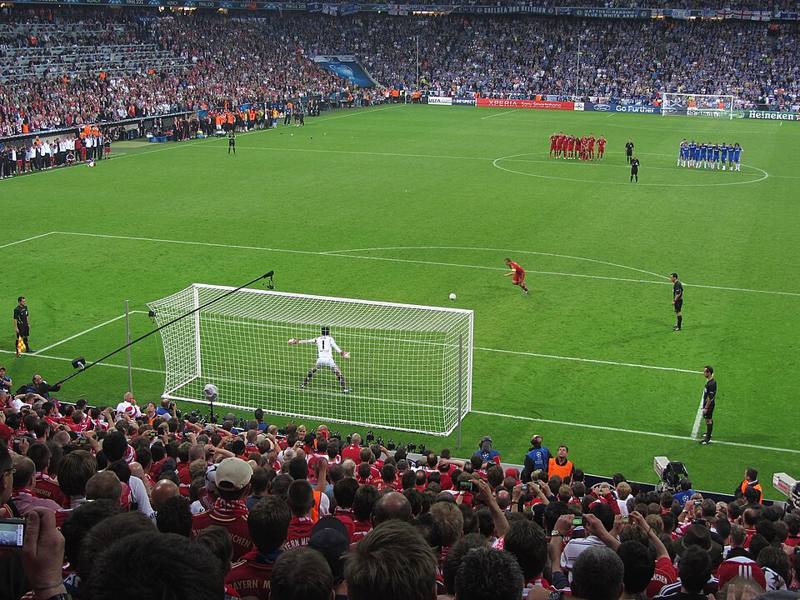
From the round of 32 onward, every match needs a winner. If it is level after 90 minutes, two 15-minute periods of extra time are played, and if it is still level, a penalty shootout decides it. See extra time and shootouts.
How teams qualified
Each confederation had a fixed number of places, and two more were decided by an intercontinental playoff tournament. The three hosts qualified automatically.
| Confederation | Region | Direct places |
|---|---|---|
| UEFA | Europe | 16 |
| CAF | Africa | 9 |
| AFC | Asia | 8 |
| CONMEBOL | South America | 6 |
| CONCACAF | North and Central America and the Caribbean | 6, including the three hosts |
| OFC | Oceania | 1 |
| Intercontinental playoff | Mixed | 2 |
Why expand to 48?
FIFA's stated aim was to give more countries the chance to play at a World Cup, especially from regions that previously had few places. Critics worried about player workload and the quality of some group matches; the new third-place route also means fewer "dead" final group games, because more teams stay in contention.
For the full list of past winners and records, see World Cup history.