Soccer Guides / Skills and training
Dribbling and skill moves
Close control basics plus eight classic moves, from the step-over to the Cruyff turn, with when to use each and how to practice.
Close control first
Before any move, master the basics:
- Small touches with both feet, keeping the ball within a step.
- Head up between touches to see defenders and space.
- Low center of gravity, knees bent, ready to change direction.
- Use all surfaces: inside, outside, sole and laces.
A dribbler's real weapons are change of pace and change of direction. Moves only help create those moments.
Eight classic moves
| Move | How it works | Best use |
|---|---|---|
| Step-over | Circle the foot over the ball from inside to outside, then push the ball the other way | Facing a defender, to shift them |
| Scissors | Circle the foot from outside to inside around the ball | Similar to the step-over, at speed |
| Cruyff turn | Fake a pass or cross, then drag the ball behind your standing leg with the inside of the foot and turn | Changing direction when a defender is beside you |
| Drag-back | Pull the ball back with the sole and turn | Escaping pressure from the front |
| Body feint | Drop a shoulder one way, go the other | Simple, quick, very effective |
| Elastico | Push the ball out with the outside of the foot, then snap it back with the inside | Tight 1v1 situations, needs lots of practice |
| Roulette (360) | Drag the ball with the sole of one foot, spin, drag with the other | Rolling away from a challenge in midfield |
| La croqueta | Shift the ball quickly from the inside of one foot to the other | Slipping between two defenders |
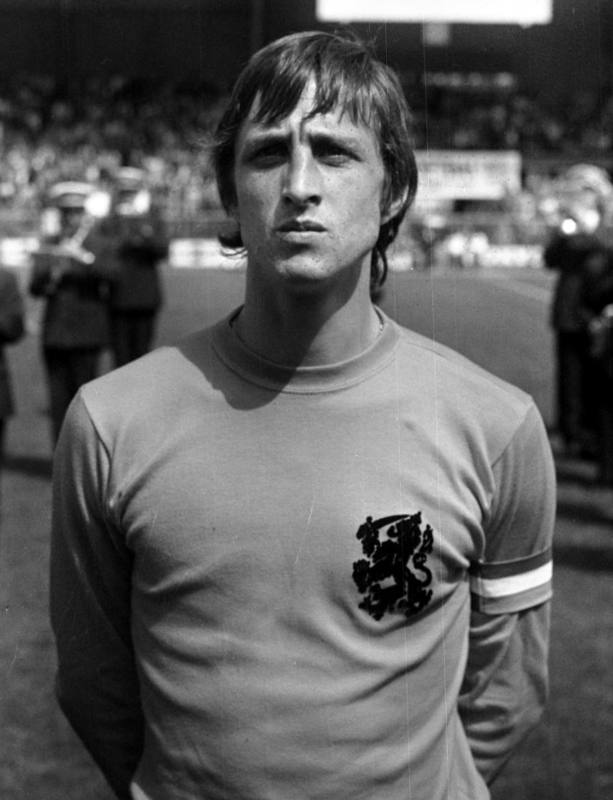
The Cruyff turn is named after Dutch forward Johan Cruyff, who used it at the 1974 World Cup.
When to dribble
Dribbling is a decision. Good moments:
- In the attacking third, especially 1v1 against a defender with no cover.
- When there is space in front of you and no simple pass.
- To draw two defenders and free a teammate.
Be careful dribbling in your own defensive third, where losing the ball can lead directly to a goal.
Practice routines
- Cone weave: six cones 1 m apart. Dribble through with inside touches, then outside, then only the weaker foot.
- Move of the week: choose one move from the table and do 50 repetitions a day, slowly at first, then at speed.
- 1v1 channel: in a 10 m by 20 m channel, attack a defender and try to cross the end line with the ball.
- Mirror game: two players face each other; the attacker tries to reach a gate while the defender mirrors.
- Tennis-ball touches: dribble a tennis ball to sharpen close control.
Shielding the ball
Not every dribble beats someone. Shielding means putting your body between the ball and the defender, keeping the ball on your far foot and using your arm for balance (without pushing or holding). It buys time for teammates to arrive.
Practice with your weaker foot every session. Defenders read one-footed dribblers easily.