Soccer Guides / Positions and tactics
Set pieces: corners, free kicks and long throws
Why dead-ball situations decide so many matches, the marking systems teams use, and the routines coaches design for corners and free kicks.
Why set pieces matter
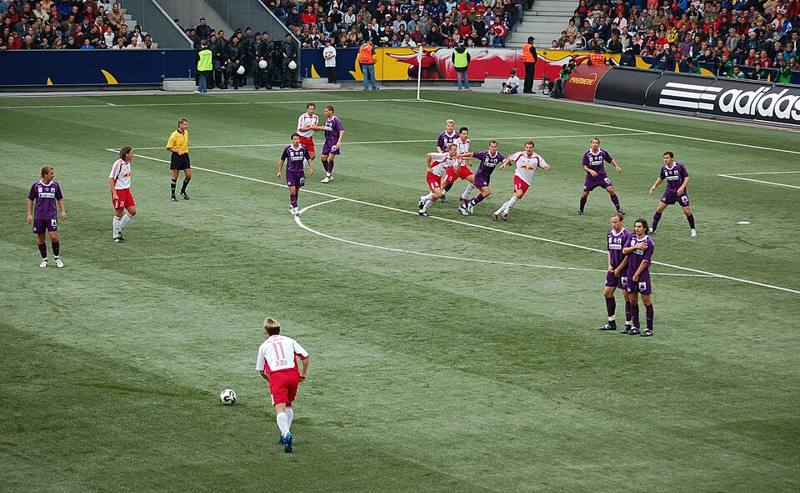
A set piece is any restart where the ball is stationary and the team in possession can plan: corners, free kicks, throw-ins, kick-offs and penalties. Set pieces give every team, including less skilled ones, a chance to score through organization and rehearsal. Many top clubs now employ specialist set-piece coaches.
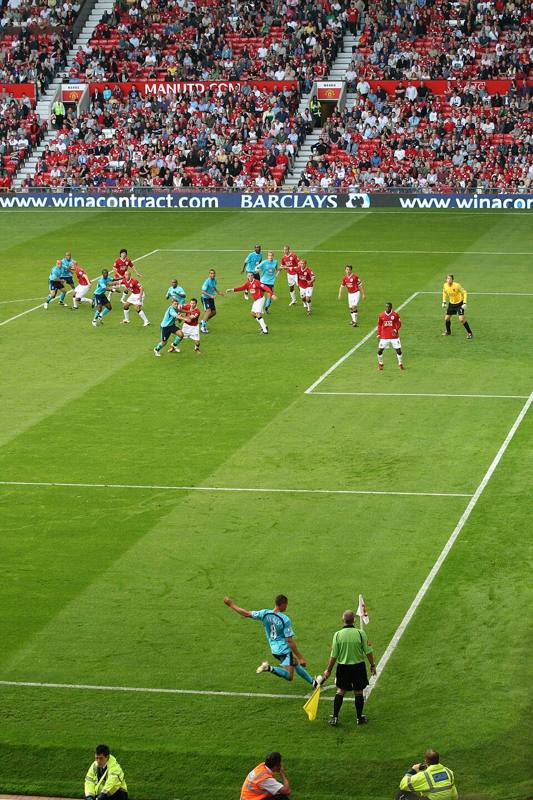
Corners: attacking
Attacking corners combine the delivery and the movement.
- Inswinger: curls toward the goal, harder for the keeper to claim, easy to redirect.
- Outswinger: curls away from goal, giving attackers a chance to attack the ball with momentum.
- Short corner: a short pass to change the angle or pull defenders out.
Common movement patterns include blockers (legally screening a marker's path), decoy runs to the near post, and a player attacking the area around the penalty spot. A player is often placed in front of the goalkeeper, but holding or blocking the keeper illegally can be penalized as a foul.
Corners: defending
| System | How it works | Strengths | Weaknesses |
|---|---|---|---|
| Man marking | Each defender follows a specific attacker | Clear responsibility | Blocks and runs can free attackers |
| Zonal marking | Defenders guard zones, attacking the ball in their area | Defenders attack the ball facing it | Attackers can run into gaps between zones at speed |
| Hybrid | Zonal defenders in key areas plus markers on the main threats | Combines both | Requires good communication |
Direct free kicks
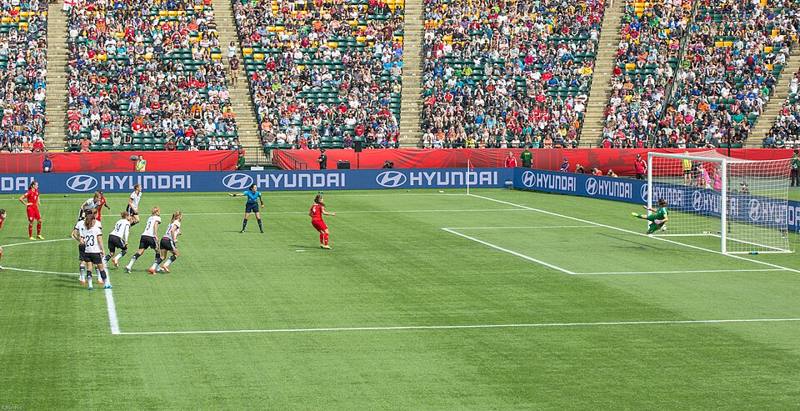
Near the penalty area, the defending team builds a wall to block part of the goal while the keeper covers the rest. Under the Laws, attackers must stay at least 1 m from a wall of three or more defenders. Kickers try to curl the ball over or around the wall, or drive it low under jumping players. Some teams place a player lying behind the wall to block low shots. See restarts for the full rules and shooting for technique.
Indirect free kicks and wide free kicks
Wide free kicks are treated like corners from a better angle. Indirect free kicks inside the area are rare, but when they happen the defending team can line up on the goal line if the kick is closer than 9.15 m to goal.
Long throws
A long throw-in into the penalty area behaves much like a corner, with an important bonus: there is no offside from a throw-in. Some teams use specialist long throwers to create chaos near goal.
Designing a routine
Coaches typically plan a small number of rehearsed routines, give them simple code names, and use signals such as a raised arm from the taker. Good routines answer three questions:
- Where is the opponent weakest (height, zonal gaps, slow defenders)?
- Where will the ball be delivered?
- Who arrives late to take the second ball or a rebound?
Even at youth level, practicing two simple corner routines and a clear defensive plan can win close games.